Showing posts with label eBooks. Show all posts

Monday, March 12, 2012

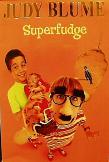
An open letter to Judy Blume

Are you there, Judy? It's me, Turner....

Dear Ms. Blume,

I am a big fan - on many levels. Born in the early 80s, I grew up with your books. They were in my home, in my classrooms and in my public and school libraries. As a child, the covers of your books were comforting. I especially loved the Fudge Series. They helped me recognize that no family was perfect and that relationships between brothers can be difficult, but are still built on love. Important lessons for a ten year old boy.

I will be honest - between middle school and graduate school, I did not think of you or your books that often. But I continued to be an avid reader. You slipped back into my life in 2008 - when I was working at a bookstore and saw that you wrote the introduction to that year’s Best American Nonrequired Reading (I especially loved your pirate photo).  Rediscovering you prepared me for learning of your rock-star status when I entered library school in 2009. Librarians LOVE you - as we should. You have been on the forefront of the fight against censorship and you deserve every award and accolade you have received.

Last week, when it was announced that 13 of your titles are going to be released as ebooks, I felt compelled to write you. As someone who rides public transportation, I am a fan of ereaders. I also believe that offering the opportunity to read in a variety of formats is a good thing - what K. G. Schneider describes as a reading ecology. That said, the way publishers provide ebooks to libraries is causing me anxiety. Especially Random House, who appear to be raising some prices as much as 300%. These prices will take a large bite out of library’s budgets and might hinder our ability to provide an expansive collection to our community members. Some librarians are already thinking of alternative uses for their ebook budget.

I know that Random House is your publisher, and you never want to bite the hand that feeds you. But you are also a champion of libraries, and this is a battle that we are currently fighting.  Even halfway through this letter, I am not sure of my intentions. Ideally, I would love for you to come to our aide - this is a fight that is going to depend on the participation of librarians, readers and authors alike. But I know that defying your publisher in anyway is a dangerous move. I guess I would just like you to be aware of the predicament that we are in. I hope through the technological advancements of retweeting and reposting you might see this letter (I did mail this letter to you through you publisher, but I’ll be surprised if it gets to you...).

Thank you. For all that you already have done. In the past forty years you have influenced American culture and inspired many librarians (including this one) to fight the good fight. Whether or not this letter has an effect, know that you are still a hero. And the battle rages on....

Sincerely,

J. Turner Masland

Sunday, March 4, 2012

How do we add bite to our bark?

Photo credit: Surtr via Flickr
ALA President Molly Raphael issued the following statement in response to the announcement that Random House is raising prices of ebooks for libraries

While I appreciate Random House’s engagement with libraries and its commitment to perpetual access, I am deeply disappointed in the severe escalation in ebook pricing reported today. Calling on our history together and our hope to satisfy mutual goals moving forward, the American Library Association strongly urges Random House to reconsider its decision. In a time of extreme financial constraint, a major price increase effectively curtails access for many libraries, and especially our communities that are hardest hit economically.

Also, ALA appreciates the data gaps that exist, and we commit to work quickly and collaboratively to address this concern. We must have better data to inform decisions that have such wide and deep implications.

Finally, we recognize and thank those publishers and aggregators that have worked with libraries on e-book lending models at a time of significant disruption and change. Libraries must have the ability to purchase a wide range of digital content at a fair price so that all readers have full access to our world’s creative and cultural resources, especially those who depend on libraries as their only source of reading material.

Libraries belong at the center of this digital revolution, not on the periphery. We continue to seek partners to further our shared goals of connecting readers and authors well into the 21st century.

I am very glad that Raphael and the ALA are coming out with a statement, but.... I feel that this is all bark and no bite. I agree that libraries need to be at the center of the digital revolution - but what exactly are we doing to stay there? As I mentioned in an earlier post, I believe that the ebook debate will not be solved by a technological solution but through a moral argument. How can we make the publishers agree that open access to information is an American virtue and they should be working with us instead of hindering us? 

I know that these are some big questions, but this is a big issue and I am not sure where the solution lies. I do know that we need to continue  to ask these questions, as well as work together to make sure our voice is heard. 

The Digital Shift has a great guide, Publishers in the Library Ebook Market, for anyone (like me) who needs some more back ground context to this debate. 

As always, Andy Woodworth is lending some valid observations/arguments/agitations/suggestions to this debate. Today he had a great post putting forth the notion that Overdrive should partner with Amazon, becoming a potential major player in providing ebook content for libraries libraries.

What do you think, dear readers? Are there any other writers out there who are putting forth valid arguments in this discussion?  What is our future going to look like? you have to admit, with these big questions and big issues, it's an exciting time to be a librarian...
  

Wednesday, February 22, 2012

Protecting the commons

Photo credit: _PaulS_ via flickr
Before becoming a librarian, I earned a BA degree in environmental sociology - studying the interaction of social and ecological systems. During that time I was influenced by the idea of the commons - specifically the tragedy of the commons. This is the theory that natural resources shared by a community need to be properly managed and protected.  The classic example is a communal pasture where herds of animals graze. If each herdsman decides to add more animals to their stock, soon the pasture will not be able to support any life form. While many writers and theorists have discussed the commons in regards to environmental thought, the concept was made famous in Garrett Hardin's '"The Tragedy of the Commons," published in the December 1968 edition of Science. Hardin open the article building off Wiesner and York's discussion of the nuclear arms race, quoting them as saying "It is our considered professional judgement that this dilemma has no technical solution." Hardin took the further and looks at the tragedy of the commons as having no technical solution but requiring a fundamental extension in morality.

An example of a successfully managed commons is the Maine lobster industry. Maine lobster-men know that they must follow loosely-regulated restrictions in order to secure the future of their industry. If they over harvest, there will be no more lobsters. That's why, in the face of technological innovations, they have been using the same harvesting methods for close to 125 years.

What does environmental theory, the nuclear arms race and Maine lobster have to do with libraries?  As open space and natural resources are the commons to environmental theory, access to information through libraries (both physical or digital) are the commons to library science. I believe that the management of ebooks will be the libraries industry "tragedy of the commons."

There is a battle being raged, between publishers and libraries over access of electronic content: dealing with the licensing, access and distribution of electronic information - and ebooks seem to be the latest vanguard of this fight.  I will admit, a lot of what is happening is over my head, having never had to deal directly with library acquisitions or collection development policy. But what it seems to boil down to is the publishing industry protecting its profit margins while librarians protect the right of their patrons to access information.

Hardin stated that "a technical solution may be defined as one that requires a change only in the techniques of the natural [or communication] sciences, demanding little or nothing in the way of change in human values of morality."  Digital rights management has been part of the publishing industry as a technological solution to control content - which is handy for fighting piracy, but when applied to libraries can limit access of information. It seems that the argument on side of the publishers is that they are trying to protect authors and copyright holders. But we need to remember that copyright was founded as a balancing act - to not only promote incentives for authors and creators to share their ideas, but also to allow for the general public access to their ideas to build upon them.

And just like Wiesner, York and Hardin concluded, I do not believe that there will be a technical solution, but we need to bring about a look at our morality in dealing with freedom to read. Do we value open and private access to information? As a democratic nation whose foundations include the creation of modern libraries, I would like the think that we do - we just might have to make others see that, too. 

As I still try and learn about the logistics and strategies of this fight - I do know that librarians need to stick together and raise their voices. It is through collected action that gains can be made. Look at the fight in academia over the controversies of scholarly communication and the rising costs of journal titles. The collected action of librarians and faculty to boycott these journals is starting to make an impact.

As we work to combine our voices, we should look to leaders in this fight. This is who I am currently following:

K.G. Schneider had an excellent recent post on her blog, Free Range Librarian. Keeping with the environmental theme, she describes this as a problem with "reading ecology."

Andy Woodworth has been a constant voice in the discussion of eBooks in the library setting through his blog, Agnostic, Maybe.

Sarah Houghton, the Librarian in Black, has also been very vocal in speaking up for readers rights - and even has a YouTube channel where she uploaded a video discussing her views of how Amazon treat library patrons.

This is an ongoing debate, and I would love for you to share your thoughts. How do you think libraries should handle the ebook situation? Who have you heard speak up to publishers in the name of freedom to read? What will the future look like? Let us know in the comments below and let's keep this conversation going...

References:
J. B. Wiesner and H. F. York, Sci. Amer. 1964; 211 (No. 4): 27
G. Hardin, Science 1968 Dec 13; 162 (5364):1243-8

Thursday, April 21, 2011

Another eBook Option

In case you missed it, yesterday Amazon announced that they were partnering with OverDrive to start a kindle library lending program.

This is kind of a big deal.

First, because there are millions of kindle (or kindle app) owners who would like to borrow ebooks from the library. As of yet, libraries haven't been able to officially provide this service (emphasis on officially) because Amazon won't let them.

Second, librarians are still feeling the sting from the Harper Collins debacle- in that Harper Collins will only allow an ebook to circulate 26 times, after which the library has to repurchase the book. Which is stupid.

With this being a big deal, it is all over the internet. You can read the Amazon press release and the OverDrive press release. You can read the story, with excellent commentary, in the New York Times or in the LA Times. And then there are the librarian blogs. Thankfully, they seem to be asking very pertinent questions, trying to make sense of what is to come and ensuring that they can provide the best service to their patrons as possible. Because librarians are awesome like that. The top three blogs that have featured this story, in my humble opinion, are the Librarian in Black, the Librarian by Day and I Found Myself in the Library (written by a recent MLIS grad).

Since I don't have much responsibility (or experience) with collection management, I am following this story from the side lines. I find this story particularly fascinating in comparison with Harper Collins' recent policy announcement about the lending of their ebooks. I keep finding my self comparing the two companies. Harper Collins is one of the world's larget publishers. The are directly producing and disseminating content. It makes sense that they want to protect their assets and keep their authors happy. But, they need to be more realistic in their relations with libraries. Amazon is a retailer - and one of the world's largest. While they also want to have good relationships with authors, and publishers for that matter, they are not directly involved with the production of content as Harper Collins. However, they are both companies and therefore need to turn a profit. So now we wait and see what Amazon is going to do....

[Update: After going through my reader, I saw that Andy over at Agnostic, Maybe also has a great post on this issue, also looking at the retailer/publisher comparison]

...I would like to point out that this is not Amazon's first dealings with other learning organizations. As I blogged about back in January 2010, Amazon was working with Reed College and other universities in testing the practicality of students using kindles in the classroom. That study was stopped by the U.S. Justice Department, after complaints from blind students. In a way, I feel that this supports my theory that eReaders are going to be a much larger issue for public libraries than academic libraries. Academic libraries really jumped on the eContent bandwagon with electronic journals, which has been working out okay (there still is a whole bevy of issues of dealing with vendors and subscriptions), but I am not sure if academic patrons are going to be as interested in eReaders and consumers of popular fiction -with seems to be the kindle's largest audience. I guess we will just have to wait and see...