Showing posts with label Library advocacy. Show all posts

Monday, October 22, 2012

Why I Support EveryLibrary

In all of your deliberations in the Confederate Council, in your efforts at law making, in all your official acts, self-interest shall be cast into oblivion. Cast not over your shoulder behind you the warnings of the nephews and nieces should they chide you for any error or wrong you may do, but return to the way of the Great Law which is just and right. Look and listen for the welfare of the whole people and have always in view not only the present but also the coming generations, even those whose faces are yet beneath the surface of the ground – the unborn of the future Nation. 
- Great Law of the Iroquois

As an undergraduate taking environmental studies classes, the notion put forth by the Iroquois that all decisions should be made in consideration of how they will impact the community seven generations down the road was an idea that quickly influenced my ideology. I first came across it in terms of making sustainable choices, but I feel that it is an idea that can be applied to a lot of choices - especially political ones. I think that is where my frustration with Presidential Elections comes from. They always seem short sighted. National conversations appear to focus on why problems aren't fixed right away (it's going to take more than four years to bounce back from the worst financial disaster since the Great Depression) instead of the long term effects of political decisions made by our leaders (I often feel that a president's greatest power is in appointing Supreme Court Justices - who serve for life).

In the spirit of thinking of generations to come, this election season I am really throwing my support behind a brand new Political Action Committee called EveryLibrary.

Founded by John Chrastka, EveryLibrary is a national organization with the mission of building financial and tactical support to ensure that local library initiatives pass at the ballot box.

EveryLibrary will not fund any candidate for office at any level of government, nor will it work on Capitol Hill or at the State Capitols. It is focused exclusively on helping the local library secure the funding it needs when there is a tax or referendum on the local ballot. Here is a list of libraries that are currently on the ballot.

EveryLibrary will :
  • Assist libraries in both the pre-filing and campaign stages of an initiative.
  • Provide strategic consulting services, voter segmentation advice, and assistance in developing ballot language.
  • Conduct feasibility studies and assist in setting up a local committee or PAC.
  • Develop a fundraising strategy for a local committee or PAC.
  • Train volunteers in voter education and get-out-the-vote techniques.
During the run of a campaign, EveryLibrary can:
  • Continue technical and capacity-building consultancy.
  • Provide direct financial support to the local committee or PAC in seed-stage or sustaining levels of support.
  • Conduct direct voter education and get-out-the-vote efforts.
EveryLibrary is currently attempting to raise $50,000 by election day. This money will be used to: (A) Fundraise nationally to transfer "seed money" to local ballot committees and PACs; (B) Hire great campaign consultants to make sure we do voter outreach and education right; and (C) Fund full time staff to keep the PAC engine growing for future success.

In an attempt to meet this goal, John Chrastka has challenged each state to raise $1,000 by November 6th. 

I decided to volunteer to help Oregon raise money for EveryLibrary, because I believe that ensuring that libraries stay open and operation is a solid step towards creating a sustainable future for future generations. 

So now I am asking you to also step up, in consideration for future libraries users, and throw in $5 or $10 or however much you are willing to give towards this excellent cause by donating here: http://tinyurl.com/OR4ELPAC

Leading up to November 7th - I know that we are facing what seem like enormous decisions on local and national ballots. But I am putting my faith into EveryLibrary, and I hope that you will too. 

If you would like to read more about EveryLibrary or follow along with its progress, here is a list of links worth following:  


Monday, March 12, 2012

An open letter to Judy Blume

Are you there, Judy? It's me, Turner....

Dear Ms. Blume,

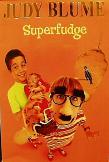
I am a big fan - on many levels. Born in the early 80s, I grew up with your books. They were in my home, in my classrooms and in my public and school libraries. As a child, the covers of your books were comforting. I especially loved the Fudge Series. They helped me recognize that no family was perfect and that relationships between brothers can be difficult, but are still built on love. Important lessons for a ten year old boy.

I will be honest - between middle school and graduate school, I did not think of you or your books that often. But I continued to be an avid reader. You slipped back into my life in 2008 - when I was working at a bookstore and saw that you wrote the introduction to that year’s Best American Nonrequired Reading (I especially loved your pirate photo).  Rediscovering you prepared me for learning of your rock-star status when I entered library school in 2009. Librarians LOVE you - as we should. You have been on the forefront of the fight against censorship and you deserve every award and accolade you have received.

Last week, when it was announced that 13 of your titles are going to be released as ebooks, I felt compelled to write you. As someone who rides public transportation, I am a fan of ereaders. I also believe that offering the opportunity to read in a variety of formats is a good thing - what K. G. Schneider describes as a reading ecology. That said, the way publishers provide ebooks to libraries is causing me anxiety. Especially Random House, who appear to be raising some prices as much as 300%. These prices will take a large bite out of library’s budgets and might hinder our ability to provide an expansive collection to our community members. Some librarians are already thinking of alternative uses for their ebook budget.

I know that Random House is your publisher, and you never want to bite the hand that feeds you. But you are also a champion of libraries, and this is a battle that we are currently fighting.  Even halfway through this letter, I am not sure of my intentions. Ideally, I would love for you to come to our aide - this is a fight that is going to depend on the participation of librarians, readers and authors alike. But I know that defying your publisher in anyway is a dangerous move. I guess I would just like you to be aware of the predicament that we are in. I hope through the technological advancements of retweeting and reposting you might see this letter (I did mail this letter to you through you publisher, but I’ll be surprised if it gets to you...).

Thank you. For all that you already have done. In the past forty years you have influenced American culture and inspired many librarians (including this one) to fight the good fight. Whether or not this letter has an effect, know that you are still a hero. And the battle rages on....

Sincerely,

J. Turner Masland

Sunday, March 4, 2012

How do we add bite to our bark?

Photo credit: Surtr via Flickr
ALA President Molly Raphael issued the following statement in response to the announcement that Random House is raising prices of ebooks for libraries

While I appreciate Random House’s engagement with libraries and its commitment to perpetual access, I am deeply disappointed in the severe escalation in ebook pricing reported today. Calling on our history together and our hope to satisfy mutual goals moving forward, the American Library Association strongly urges Random House to reconsider its decision. In a time of extreme financial constraint, a major price increase effectively curtails access for many libraries, and especially our communities that are hardest hit economically.

Also, ALA appreciates the data gaps that exist, and we commit to work quickly and collaboratively to address this concern. We must have better data to inform decisions that have such wide and deep implications.

Finally, we recognize and thank those publishers and aggregators that have worked with libraries on e-book lending models at a time of significant disruption and change. Libraries must have the ability to purchase a wide range of digital content at a fair price so that all readers have full access to our world’s creative and cultural resources, especially those who depend on libraries as their only source of reading material.

Libraries belong at the center of this digital revolution, not on the periphery. We continue to seek partners to further our shared goals of connecting readers and authors well into the 21st century.

I am very glad that Raphael and the ALA are coming out with a statement, but.... I feel that this is all bark and no bite. I agree that libraries need to be at the center of the digital revolution - but what exactly are we doing to stay there? As I mentioned in an earlier post, I believe that the ebook debate will not be solved by a technological solution but through a moral argument. How can we make the publishers agree that open access to information is an American virtue and they should be working with us instead of hindering us? 

I know that these are some big questions, but this is a big issue and I am not sure where the solution lies. I do know that we need to continue  to ask these questions, as well as work together to make sure our voice is heard. 

The Digital Shift has a great guide, Publishers in the Library Ebook Market, for anyone (like me) who needs some more back ground context to this debate. 

As always, Andy Woodworth is lending some valid observations/arguments/agitations/suggestions to this debate. Today he had a great post putting forth the notion that Overdrive should partner with Amazon, becoming a potential major player in providing ebook content for libraries libraries.

What do you think, dear readers? Are there any other writers out there who are putting forth valid arguments in this discussion?  What is our future going to look like? you have to admit, with these big questions and big issues, it's an exciting time to be a librarian...
  

Monday, November 7, 2011

Occupy Your Bookshelf

I've been thinking of ways to support the Occupy Wall Street movement. I would love nothing more than to join their ranks and camp out, but between finishing school and juggling various jobs, I haven't had the opportunity.

I have been very impressed with the role that librarians have been playing, with the creation of Occupy Libraries in various cities. The OWSLibrary in Zuccotti Park has over 4500 titles, the OccupyPortland library has close to 800 title, and even OccupyMaine has a library with about 50 titles.

While I don't have any books to contribute, I did want to at least make a recommended reading list intended for protesters, participants, observers or anyone who is curious about the movement and and its mission. The list is long, about 50 titles, but Occupy Wall Street is a growing movement that is bringing attention to the economic inequity in our country - a multifaceted and often confusing issue.

I have the list broken up into four categories: The first category contains books that speak to economic and social theory, philosophy and history; the second looks at how our economy got to be where it is; the third contains books that deal with activism and possible alternatives economic models and the final category contains a bit of everything. I put out a call on Facebook, Twitter and Google + asking folks what they might recommend for an #OWS reading list, and some amazing titles were shared and I wanted to be sure that they were included.

I'm very happy with this list. I feel that there is something for everyone. I understand that it contains material that is pretty left of center, but that's where #OWS tends to hang out. Do you think anything is missing from this list? Is there anything that seems out of place? Please leave a comment and share your thoughts!

Without further ado, an occupy reading list:

I. Getting a Good Foundation: Theory, Philosophy and History

Author: David Orrell
Illustrator: Borin Van Loon
Year: 2011
Publisher: Totem Books

Author: Dan Cryan
Illustrator: Sharron Shatil
Year: 2005
Publisher: Totem Books

Author: Donald A. Ritchie
Year: 2010
Publisher: Oxford University Press

Author: Richard Bellamy
Year: 2008
Publisher:  Oxford University Press

Author: Bernard Crick
Year: 2003
Publisher: Oxford University Press

Author: Herbert Marcuse
Year: 1964
Publisher: Beacon Press

Author: Henry David Thoreau
Year: 1849

Author: Jonathan Swift
Year: 1729

Author: Mahatma Gandhi & Bharatan Kumarappa
Year: 1961
Publisher: Schocken Books

Title: Empire
Authors: Michael Hardt & Antonio Negri
Year: 2001
Publisher: Harvard University Press

Author: Howard Zinn
Year: 2003
Publish: HarperCollins

Author: John Brooks
Year: 1999
Publisher: Wiley

Author: Edward Chancellor
Year: 2000
Publisher: Penguin

Author: Noam Chomsky
Editor: Anthony Arnove
Year: 2008
Publisher: New Press

Author: James S. Kunen
Year: 1969
Publisher: Random House

II. What happened: Context of the Economic Recession and the Current Distribution of Wealth in America

Editor: Katrina vanden Heuvel
Year:  2009
Publisher: Nation Books

Author: Arianna Huffington
Year: 2011
Publisher: Broadway

Author: Lawrence Lessig
Year: 2011
Publisher: Twelve

Author: Glenn Greenwald
Year: 2011
Publisher: Metropolitan Books

Authors: Fred Magdoff & Michael D. Yates
Year: 2009
Publisher: Monthly Review Press

Authors: John Bellamy Foster & Fred Magdoff
Year: 2009
Publisher: Monthly Review Press

Author: Ron Suskind
Year: 2011
Publisher: Harper

Author: David C Korten
Year: 2003
Publisher: Berrett-Koehler Publishers

Author: Thom Hartmann
Year: 2007
Publisher: Berrett-Koehler Publishers

Author: Chris Hedges
Year: 2010
Publisher: Nation Books

III. Moving Forward: Activism and Alternatives

Authors: Donatella Della Porta & Mario Diani
Year: 2010
Publisher: Wiley-Blackwell

Author: T. V. Reed
Year: 2005
Publisher: University of Minnesota Press

Author: Anthony M. Orum & John G. Dale
Year: 2008
Publisher; Oxford University Press

Authors: Jerome Armstrong & Markos Moulitsas
Year: 2006
Publisher: Chelsea Green

Author: Saul Alinksy
Year: 1989
Publisher: Vintage

Authors: Michael Ratner & Margaret Ratner Kunstler
Year: 2011
Publisher: The New Press

Author: David C Korten
Year: 2010
Publisher: Berrett-Koehler Publishers

Author: Kelly Coyne
Illustrator: Eric Knutzen
Year: 2010
Publisher: Process

Authors: Scott Kellogg & Stacy Pettigrew
Year: 2008
Publisher: South End Press

Author: Paulo Freire
Year: 2008
Publisher: Continuum

Editor: Howard Zinn
Year: 2002
Publisher: Beacon Press

IV. Miscellaneous

Author: Mark Hersgaard
Year: 1999
Publisher: Broadway

Author: Abbie Hoffman
Year: 1995 (25th Anniversary Edition)
Publisher: Da Capo Press

Author: Pablo Neruda
Editor: Ilan Stavans
Year: 2005
Publisher: Farrar, Straus and Giroux

Author: George Oppen
Year: 1968
Publisher: New Directions

Author: Starhawk
Year: 1997
Publisher: Beacon Press

Author: Naomi Klein
Year: 2008
Publisher: Picador

Author: Naomi Wolf
Year: 2007
Publisher: Chelsea Green Publishing

Author: Elaine Brown
Year: 1993
Publisher: Anchor

Author: Audre Lorde
Year: 2007
Publisher: Crossing

Title: The Lorax
Author: Dr. Seuss
Year: 1971
Publisher: Random House

Author: Munro Leaf
Illustrator: Robert Lawson
Year: 1936
Publisher: Viking

Editors: Bernardine Dohrn, Bill Ayers & Jeff Jones
Year: 2006
Publisher: Seven Stories Press

Author: Mark Rudd
Year: 2009
Publisher: William Morrow